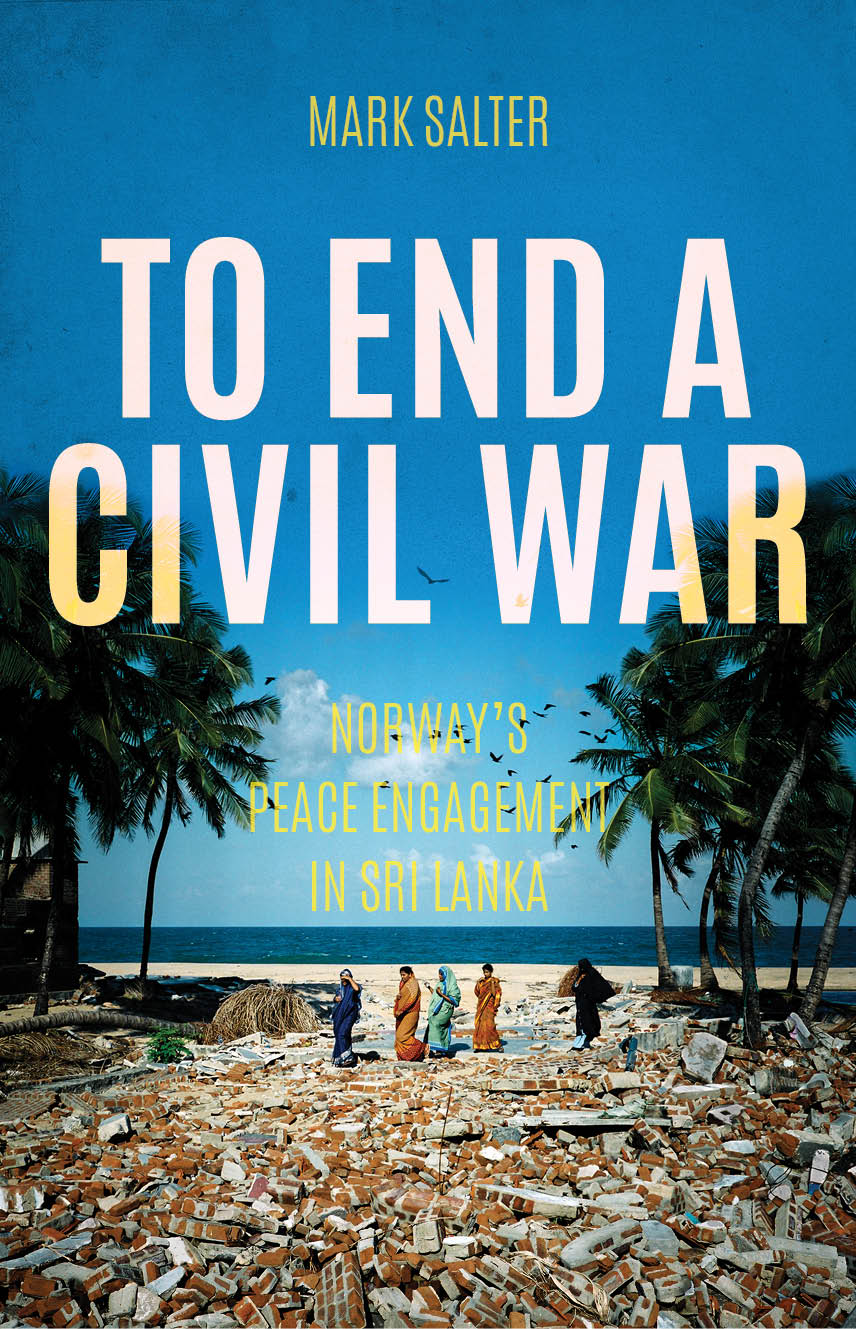
Books · Hurst · October 2015
To End a Civil War
Norway’s Peace Engagement in Sri Lanka
Hurst Publishers ↗Between 1983 and 2009 the Sri Lankan government and the Tamil Tiger guerillas engaged in a bitter civil war, with the Tigers' goal of an independent Tamil polity the key issue of contention.
The conflict’s end came in May 2009 with the Tigers' crushing defeat at the hands of the Sri Lankan army. Prior to this grim finale, however, for some time there had been hope for a peaceful end to the conflict. Starting with a ceasefire agreement in early 2002, for almost five years a series of Norwegian-mediated peace talks between the two sides took place in locations ranging from Thailand and Japan to Norway, Germany and Switzerland.
This book tells the story of how the process of trying to bring peace to Sri Lanka unfolded. In particular it tells the story of how a faraway European nation – Norway – came to play a central role in efforts to end the conflict, and what its small, dedicated team of mediators did in their untiring efforts to reach what ultimately proved the elusive goal of a negotiated peace.
While some aspects of Norway’s role have been documented elsewhere, the deeper story of that involvement has not yet been told. This book tells that story. In the process it fills a critical gap in our understanding of the Sri Lankan conflict, and highlights lessons the Norwegian mediation effort may offer for internationally-supported attempts to end conflicts elsewhere.
Launch events
The book was published by Hurst in late October 2015, followed by launch events in London, Oslo and Stockholm, then North America (Toronto, Ottawa, Washington DC) in January 2016 and South Asia (Colombo, Delhi, Chennai) in March 2016. Reports from each launch are in the writing archive.
What reviewers said
‘Peace finally came to Sri Lanka. But not without heroic efforts on the part of the Norwegian government. Its determination to support the aspirations of all Sri Lankans in the face of withering criticism deserves our respect and is a story worth telling.’
‘Such a book, an intimate and forthright account of Norway’s thankless engagement in Sri Lanka for peace and national reconciliation, is long overdue. … The sobering lesson we should all learn from these intractable experiences is that the final outcome of these efforts depends ultimately on political circumstances which are beyond the control of peace-makers.’
‘Proximity can bruise relationships, especially when it is as close as India’s to Sri Lanka. Distances can shake hands with greater facility. So when ‘distant Norway’ suggested to embattled Sri Lanka it had expertise to share in making and keeping peace, India was sceptical but encouraging. Norway’s bid in Sri Lanka to retrieve life from death did not triumph, but were its efforts in vain? Some soils hold their germinal stirrings for delayed ripening. And Norway may yet find its engagement in Sri Lanka bears fruit.’
‘An important read for all of us seeking to learn more about peaceful, negotiated means to solve conflicts. This book gives us lessons learned, always useful in our ongoing quest to find new ways to prevent and stop violence. Brave stories from two countries with a special place in my heart: Norway and Sri Lanka.’
‘This book is significant for a number of reasons as an invaluable resource for national and international policy makers and scholars. Drawing on the accounts of the two key Norwegian facilitators in one of South Asia's most protracted and bloody conflicts, the book outlines the challenges they faced and provides indispensable insight into how they were met, the attitudes and perceptions of the key Sri Lankan actors from a variety of backgrounds spanning the government, the Tamil Tigers and civil society as well as a coherent analysis of negotiations in Sri Lanka with lessons to be learned. A must read for all concerned with the situation in Sri Lanka in particular and in conflict transformation processes in countries riven by armed conflict between the state and non-state protagonists in general.’
‘Mark Salter has written a book that gives an international perspective of the run up to Sri Lanka’s 2002 Ceasefire Agreement as well as the last stages of the war. The book provides a meticulously documented account of how Norway came to be involved in Sri Lanka’s last and most promising peace process. It also addresses the issues that arose at the last stages of the war, including the controversial White Flag case where surrendering LTTE members were killed. It has a large number of interviews with those who played a front line role during those days.The book’s strength is that it gives them space to speak through their own voice, while also offering insights into peacemaking and peacekeeping that can be used elsewhere in the world.’
‘This book is indispensable, irresistible . . . a treasure trove, a chronicle of the larger Western engagement in the attempt to negotiate a settlement to the Sri Lankan conflict. It’s invaluable not only because of what it chronicles, but also because it sheds light on the past, present and possible futures of Sri Lanka.’
‘This is a fascinating story told of a European nation’s deep involvement in trying to end a raging 25 year long civil war. The book brings out surprising information on Norway’s dedicated efforts in negotiating peace in Sri Lanka, through dialogue and talks. In a major work of scholarship Mark Salter has neatly managed the near impossible task of reconciling four separate and often parallel narratives on Sri Lanka, represented by the Government of Sri Lanka, the Government of India, the Sri Lanka Tamils, (especially the LTTE) and the Government of Norway. The Norwegian peace process failed to end the civil war and was in that sense an incomplete one. But, the price paid by Sri Lanka in terms of the brutality of the operations and the massive displacement and suffering, vindicates Norway’s conviction that a military solution could not resolve the ethnic conflict. A book on conflict resolution for scholars, diplomats and those interested in South Asia.’
‘Norway's efforts to bring a peaceful end to Sri Lanka's civil war deserve this fair-minded history, accompanied by the reflections of diverse participants on lessons to be learned. These are relevant to how Sri Lanka's future now unfolds, but also to peace processes elsewhere which seek, as they must, to avoid the heartless violations of human rights and international humanitarian law recorded here.’